For twenty-seven years, Martin Ostrowski managed his own retirement portfolio with a conviction that bordered on religious faith: the stock market was the only serious vehicle for building wealth, and annuities were expensive, opaque products sold by people who earned commissions for selling them. He had read the articles. He had watched the financial television personalities. He had absorbed the conventional wisdom of the do-it-yourself investing community. When his advisor first mentioned annuities at age sixty-three, Martin's reaction was immediate and dismissive. "I have done my research," he said. "Annuities are terrible."
Six months later, Martin allocated twenty-five percent of his retirement savings to a fixed indexed annuity. This is the story of what changed his mind -- not through a sales pitch, but through a process of honest investigation that forced him to separate what he knew from what he had merely heard.
Martin's first objection was the one most skeptics lead with: fees. Variable annuities -- the product type most frequently criticized in financial media -- can indeed carry annual fees of two to three percent or more, including mortality and expense charges, administrative fees, and sub-account management fees. Martin was right about this. What he did not know was that fixed indexed annuities operate under an entirely different fee structure. Most have no annual fees whatsoever unless the owner elects an optional income rider, which typically costs between 0.75 and 1.25 percent annually. Martin had been applying the fee structure of one product category to a completely different one.
His second objection was surrender charges -- the penalties for withdrawing money early. This concern is legitimate and deserves honest treatment. Most fixed indexed annuities carry surrender periods of seven to ten years, during which early withdrawal beyond a free annual amount incurs declining penalties. This is a real limitation. It means annuity money is not fully liquid for nearly a decade. Martin was right to take this seriously. The counterpoint, which he had not considered, is that the surrender period exists because the insurance company needs time to invest the premium and generate the guarantees. It is not a hidden trap -- it is the mechanism that makes guaranteed returns possible.
The third objection -- that you lose your money when you die -- turned out to be the most outdated. Modern fixed indexed annuities include death benefits that return the full account value (or more) to beneficiaries. The old caricature of "the insurance company keeps everything" applies to certain immediate annuity structures but not to the accumulation-focused products most commonly used today. Martin had been arguing against a product that largely no longer exists in the form he imagined.
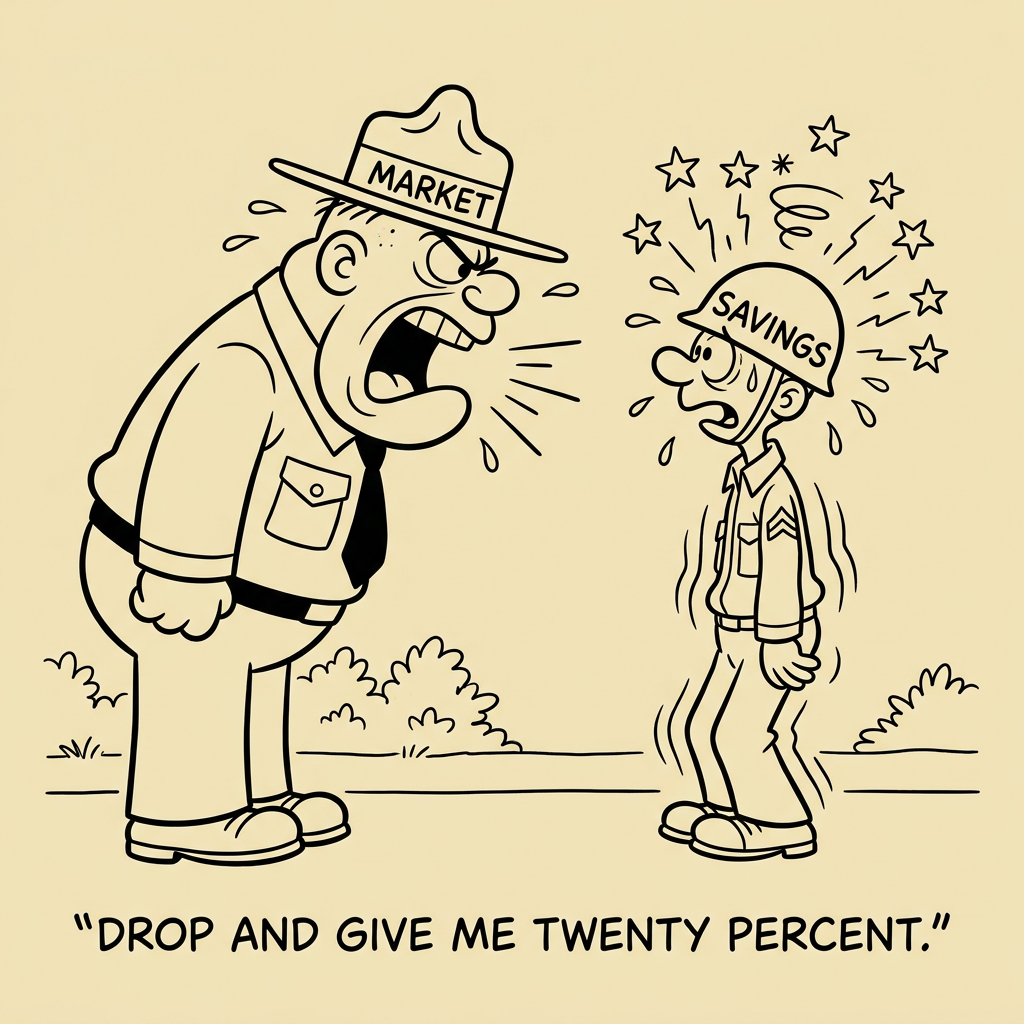
What finally moved Martin was not the resolution of his objections but the emergence of a question he had never thought to ask: what is the cost of not having guaranteed income? He ran the numbers on his own portfolio through the 2008 financial crisis. Had he been retired and withdrawing during that period, his portfolio would have sustained permanent damage -- not because the market did not recover, but because he would have been forced to sell shares at the bottom to fund his living expenses. The market recovered. A depleted portfolio cannot.
Martin now describes his position this way: annuities are not the best growth vehicle. They are not designed to be. They are an income tool -- a way to create a paycheck that arrives regardless of what the market does. Judging an annuity by its growth potential is like judging a fire extinguisher by its inability to start a fire. It misses the point entirely.
The honest summary is this: annuities have real limitations. They reduce liquidity. They cap upside potential. They require a long-term commitment. But they also solve a problem that no other financial product solves with the same certainty -- the problem of guaranteed lifetime income. Whether that trade-off makes sense depends entirely on your situation, your other assets, and your tolerance for uncertainty. Martin concluded that the trade-off was worth it. He also concluded that he had spent twenty-seven years arguing against something he had never actually understood.