For 38 years, a deposit appeared in Carol Jennings' bank account every other Friday. She did not think about it the way you think about weather or gravity — it was simply there, a rhythm so constant it became invisible. Then, on a Friday in April, it was not. She had retired the week before. She had planned for this. She had saved. And still, when she checked her account and saw no deposit, she felt something she did not expect: panic.
Carol is not unusual. In interviews with dozens of recent retirees, financial planners report that the single most disorienting moment of retirement is not a market crash or an unexpected expense. It is the first month without earned income. "People plan for retirement for 30 years," says certified financial planner David Roth, "but almost nobody rehearses what it feels like to spend money with no money coming in. It is a psychological cliff."
The financial dimension of that cliff is equally steep. The conventional wisdom — that you will need 70 to 80 percent of your pre-retirement income — has been challenged by mounting evidence. Research consistently finds that a significant share of retirees spend more in their first two years of retirement than they did while working. Travel, home projects deferred for decades, gifts to children and grandchildren, and the simple fact of having more time to spend money all contribute.
Healthcare is the line item that surprises people most. The average 65-year-old couple retiring today will spend approximately $330,000 on healthcare costs throughout retirement, according to Fidelity's 2024 Retiree Health Care Cost Estimate. That figure does not include long-term care. Medicare, while essential, covers roughly 60 percent of health expenses for those over 65, leaving substantial out-of-pocket costs for premiums, copays, dental, vision, and hearing — services many retirees assumed would be fully covered.
Then there is the math of withdrawal itself. To generate $5,000 per month from a portfolio using the traditional four-percent withdrawal rule, you need $1.5 million saved. That number shocks people who have spent decades focused on contribution rates and account balances without ever converting those balances into monthly income equivalents. A million dollars sounds like a fortune until you divide it by 360 months.
There is a meaningful counterpoint here, and it deserves honest acknowledgment: many retirees do find that certain expenses decrease. Commuting costs, professional wardrobe expenses, and payroll taxes disappear. Some retirees relocate to lower-cost areas. The issue is not that retirement must be expensive — it is that the transition from earning to spending involves a set of calculations and emotional adjustments that the accumulation phase of planning simply does not address.
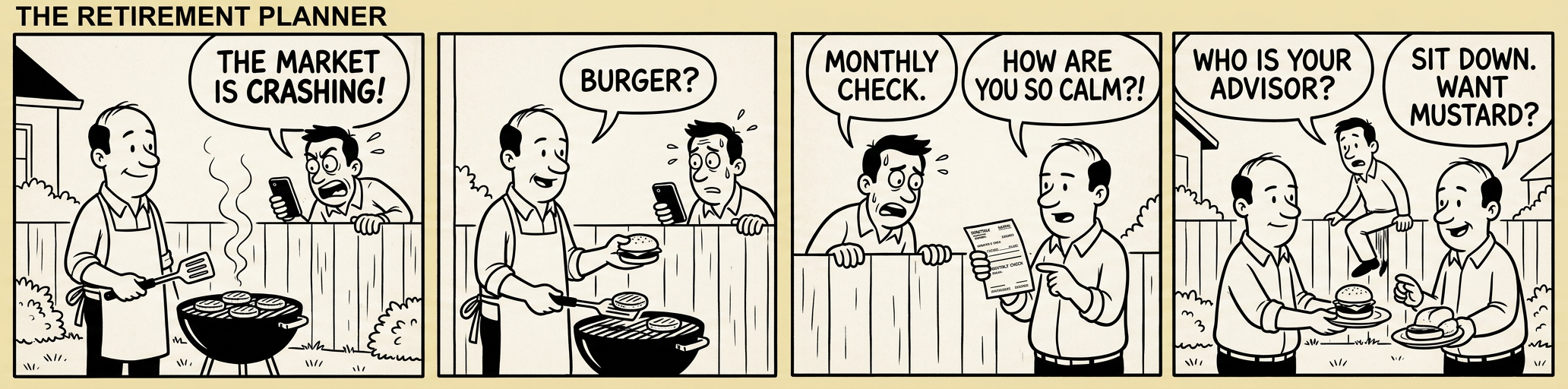
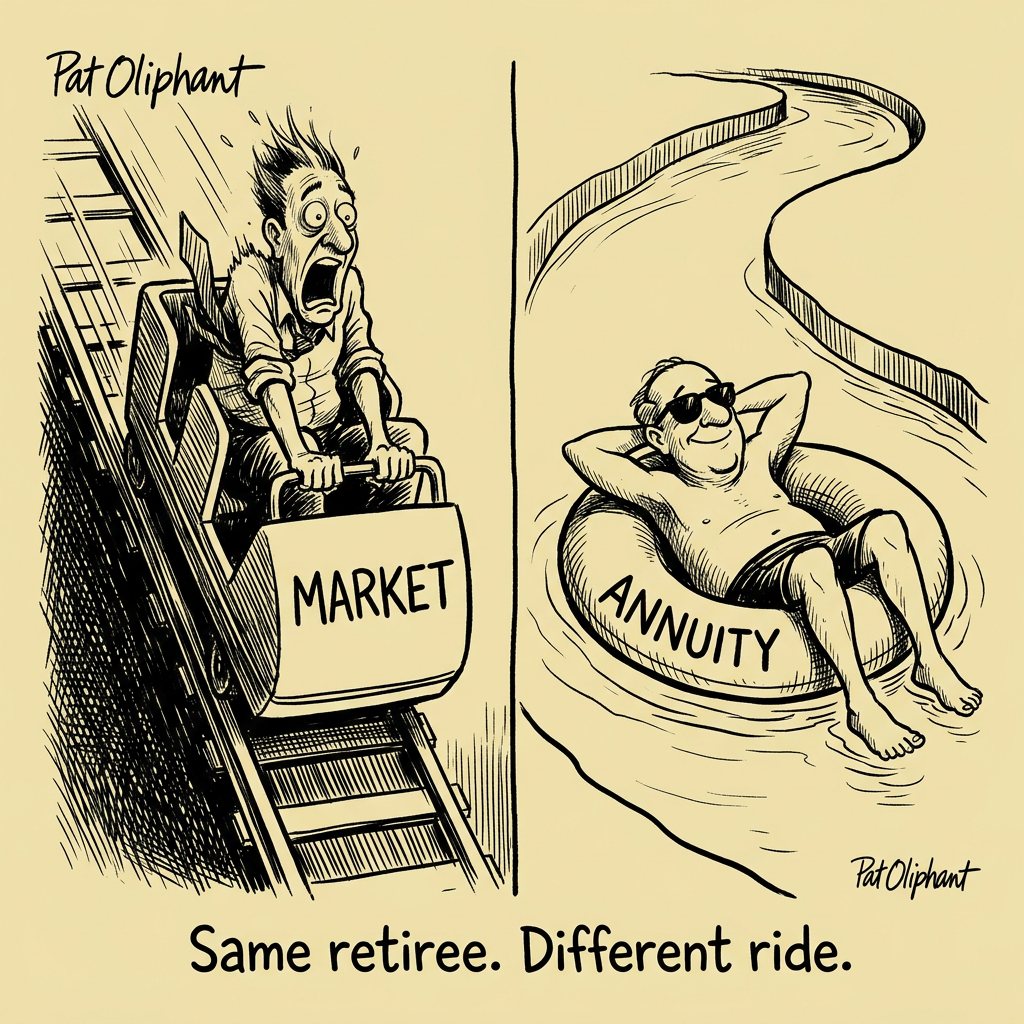
The retirees who navigate this transition most successfully share a common trait: they built an income plan, not just a savings plan. They know, to the dollar, what arrives each month — from Social Security, from pensions if they have them, from annuities or systematic withdrawals — and they have stress-tested those numbers against inflation, healthcare spikes, and the possibility of living longer than they expect.
Carol Jennings eventually found her footing. She built a monthly income budget, automated her withdrawals, and stopped checking her portfolio balance daily. "It took about six months before I stopped feeling like I was stealing from my own piggy bank," she says. Her advice to anyone approaching retirement: "Practice living on your retirement income for a full year before you actually retire. You will learn things about yourself that no spreadsheet can teach you."