The Wealth Gazette

"Understanding every tool in your retirement toolbox — so you can choose the right ones."

Vol. LXII · No. 4 ♦ Inflation & Purchasing Power Special Report ♦

The Silent Thief: How Inflation Eats Your Retirement Alive

At three percent annually, your purchasing power is halved in 24 years — and your retirement may last that long


In 1999, a gallon of milk cost $2.88. A first-class stamp was 33 cents. The median home price in the United States was $133,300. If you built your retirement budget around those numbers — or even around 2010 numbers, or 2015 numbers — you have already discovered the problem. The dollars you saved are not the dollars you are spending. They just look the same.

Inflation is the retirement risk that no one argues about and almost no one plans for adequately. Unlike a market crash, which is sudden and dramatic, inflation operates by subtraction so gradual it is nearly invisible. You do not wake up one morning to discover your money is worth 40 percent less. Instead, you notice that the grocery bill is a little higher, the insurance premium increased again, and the restaurant you used to visit every Friday now feels like a splurge. The erosion is real. It is relentless. And over a 25- to 30-year retirement, it is devastating.

The math is simple and unforgiving. At just three percent annual inflation — roughly the historical average — a dollar loses half its purchasing power in 24 years. A retiree who needs $5,000 per month today will need approximately $10,000 per month to maintain the same standard of living by age 89. If you retired at 65 with what felt like a comfortable nest egg, that nest egg needs to work twice as hard by the time you reach your late eighties.

This is where the certificate-of-deposit trap ensnares well-meaning savers. After the volatility stories of Editions past, the instinct to seek safety is understandable. CDs feel reliable. They have a stated interest rate. You know exactly what you will receive. But when CD rates hover at four or five percent and inflation runs at three percent, your real return — the only return that matters — is one to two percent before taxes. After federal and state taxes on that interest income, many CD holders are actually losing purchasing power while feeling safe.

The recent spike in inflation has made this tangible in ways that abstract percentages never could. Between January 2020 and December 2023, cumulative inflation exceeded 18 percent. A retiree spending $60,000 per year in 2020 needed approximately $70,800 to maintain the same lifestyle by 2024. Social Security's cost-of-living adjustments helped — they were historically generous during this period — but they do not cover the full gap, particularly for retirees whose spending tilts toward healthcare, housing, and food, all of which inflated faster than the headline number.

There is an honest counterpoint to acknowledge: inflation is not constant, and there have been extended periods of low inflation that provided retirees with meaningful breathing room. The decade from 2010 to 2019 saw average annual inflation of just 1.8 percent, well below the historical average. Planning for the average makes sense, but so does preparing for the spikes. The 1970s and early 1980s, when inflation exceeded 10 percent in multiple years, decimated retirees on fixed incomes. It can happen again.

The most insidious aspect of inflation risk is that it compounds alongside time — and thanks to medical advances, retirees are living longer than any previous generation. A 65-year-old woman today has a 50 percent chance of living past 87 and a 25 percent chance of reaching 93. Planning for a 20-year retirement when you may live 30 years is not conservative. It is dangerous.

The question is not whether inflation will erode your purchasing power. It will. The question is whether your retirement income strategy accounts for that erosion or pretends it does not exist. The answer, for most Americans, is uncomfortably close to the latter.
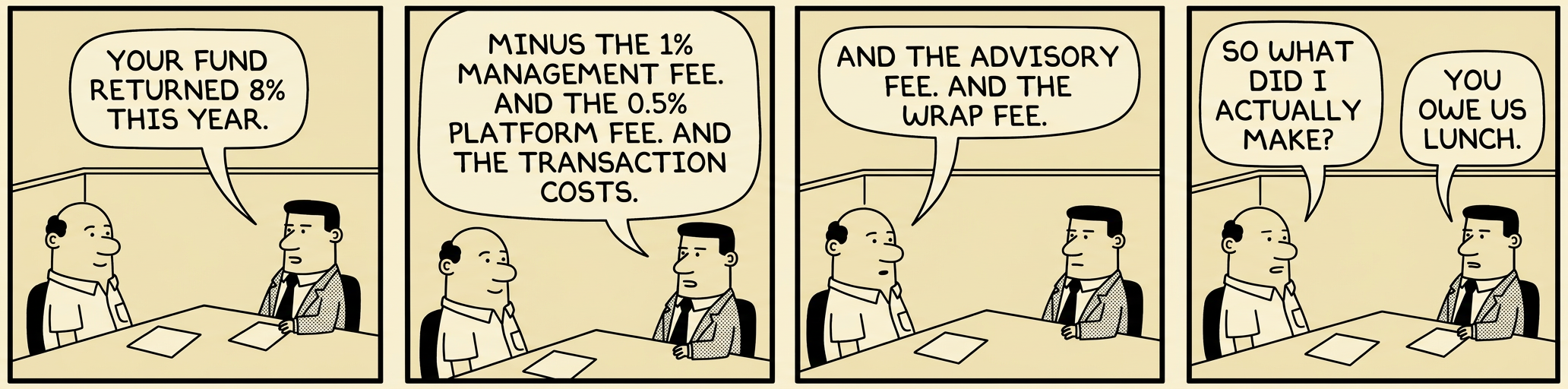
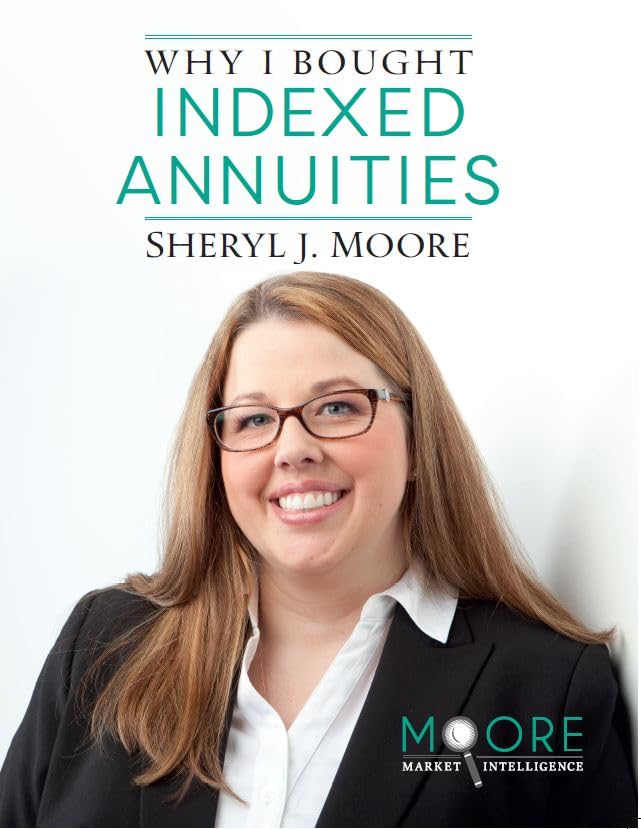
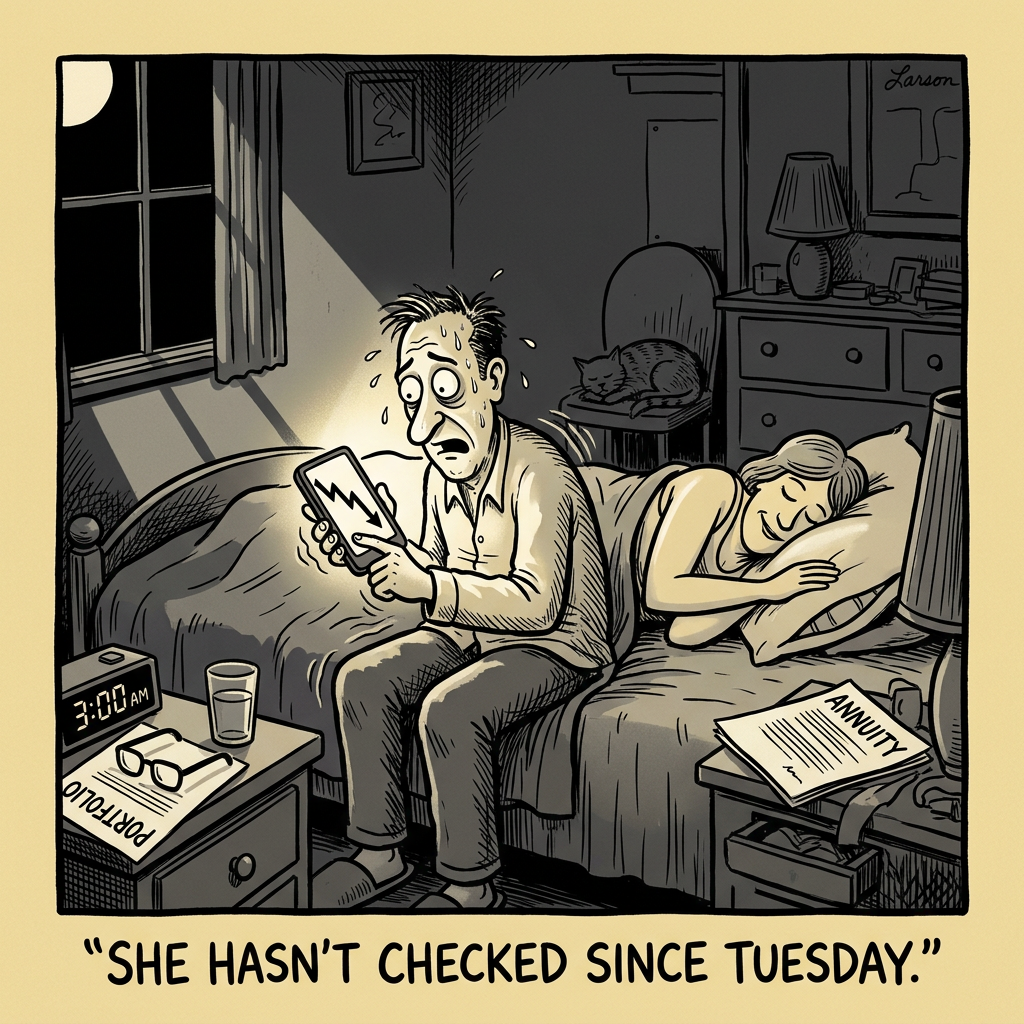
The Lighter Side of Compound Interest

A comic strip in four panels

Panel 1: A retiree in 2005 cheerfully hands $20 to a grocery cashier for a full cart of groceries. Panel 2: Same retiree in 2015, looking slightly strained, hands $20 to the cashier for a noticeably smaller collection of items. Panel 3: In 2025, the retiree hands $20 to the cashier for a single bag containing bread, milk, and eggs. Panel 4: Projected 2035 — the retiree hands $20 to the cashier, who hands back a single banana and says, 'Would you like a receipt, or is that another expense?'

Strategies That Actually Keep Pace: What Works and What Just Feels Safe


The instinct to retreat entirely into "safe" assets after retirement is understandable. But safety is relative. A portfolio that cannot keep pace with inflation is not safe — it is slowly failing in a way that does not trigger alarms until the damage is irreversible.

Treasury Inflation-Protected Securities, or TIPS, offer one straightforward tool. Their principal adjusts with the Consumer Price Index, providing a direct hedge against measured inflation. The trade-off: TIPS yields have historically been modest, and they protect against CPI-measured inflation, which may not match your personal inflation rate. They are a building block, not a complete solution.

Equities remain the most reliable long-term inflation hedge. Corporate revenues and earnings tend to rise with prices over time, which is why stocks have historically delivered returns well above inflation. The challenge, as this series has explored, is that equities also bring volatility — and in retirement, volatility is its own risk. The answer for most retirees is not all-stocks or no-stocks, but a thoughtful allocation that provides enough growth to maintain purchasing power without so much volatility that a downturn forces permanent lifestyle reductions.

Certain annuity structures offer inflation-adjusted income guarantees, building in annual increases that approximate cost-of-living growth. These come at a cost — the initial payment is lower than a flat annuity — but over a long retirement, the growing payment can be significantly more valuable. It is the financial equivalent of accepting a lower starting salary in exchange for guaranteed raises every year for life.

The honest truth is that no single product or strategy solves the inflation problem completely. Each involves a trade-off: growth versus stability, current income versus future income, simplicity versus optimization. The danger is not choosing the wrong tool. It is ignoring the problem entirely and discovering, at 82, that your comfortable retirement has quietly become an uncomfortable one.


Editor's Pick

"Why I Bought Indexed Annuities"

Written by an independent industry analyst with no incentive to sell you anything — just a straightforward look at why she chose indexed annuities, what surprised her, and what she wishes more people understood. For readers who want facts, not a sales pitch.

Why I Bought Indexed Annuities - Free Book

Request Your Free Copy Below — No Cost, No Catch

Editorial Cartoons

Editorial cartoon: A large termite labeled 'Inflation 3%' nibbles on a wooden beam labeled 'Retirement Savings.' The beam supports a small house where a retired couple sits reading on the porch, oblivious. The termite is tiny, the damage barely visible, but several beams behind it have already been eaten through completely. Caption: 'The Termite That Never Sleeps.'
Editorial cartoon: Two safes sit side by side. One is labeled 'CDs - 4.5% APY' and glows reassuringly. The other is labeled 'After Inflation & Taxes - 0.8% Real Return' and is significantly smaller. A retiree looks at both, puzzled, and says, 'Wait, those are the same safe?' Caption: 'The Illusion of Safety.'

Extra! Extra!

Your Next Steps


  1. If you received this by email: Navigate back and click the booking link to schedule your free 60-minute education session.
  2. If you received this by text: Reply to your advisor and share what stood out to you. They will take it from there.
  3. Show up to your free education session. No obligations, no sales pitch — just annuity basics and answers to your questions.
  4. Receive your complimentary copy of "Why I Bought Indexed Annuities" — our way of saying thanks for your time.

"Education first. Decisions second. Always."


Classifieds

WANTED: Grocery store that honors 2015 prices for loyal customers who have been shopping there since 1987. Must accept coupons, dignity, and mild indignation as partial payment. References available from anyone who remembers when a dozen eggs cost less than a streaming subscription.

Public Notices

NOTICE: The National Association of Fixed-Income Retirees hereby acknowledges that the phrase "living on a fixed income" is technically accurate but practically misleading, as the income is fixed but absolutely nothing else is. All parties using this phrase should append the footnote: "in an unfixed world."

Financial Forecast

OUTLOOK: The Federal Reserve's current inflation target remains 2 percent, but realized inflation has proven stubbornly above that benchmark. Retirees should plan using a range of 2.5 to 3.5 percent for baseline projections, with stress tests at 4 to 5 percent for scenario planning. Portfolios that cannot generate real returns above zero after taxes and inflation are, by definition, declining in value — regardless of what the statement says.