The Wealth Gazette

"Understanding every tool in your retirement toolbox — so you can choose the right ones."

Vol. LXII · No. 7 ♦ Education Series ♦

The Pension Your Parents Had — And How to Build Your Own

Why the most reliable retirement income in American history disappeared -- and the little-known mechanism that lets you recreate it


Your father probably had one. Your grandfather almost certainly did. The defined-benefit pension -- a guaranteed monthly check that arrived every month from the day you retired until the day you died -- was once as standard a feature of American employment as the lunch break. In 1980, 38 percent of private-sector workers participated in a defined-benefit plan. Today that number has fallen below 15 percent, and for workers under 40, it is effectively zero. The pension did not die of natural causes. It was killed by a combination of corporate accounting pressures, stock market volatility, and a little-known provision of the 1978 Revenue Act that gave birth to the 401(k).

The shift was presented as empowerment. "You are now in charge of your own retirement," employers said, as they quietly transferred billions of dollars in risk from their balance sheets to yours. What they did not mention is that managing a portfolio through a 30-year retirement requires skills that most professional money managers struggle with -- let alone someone whose actual expertise is in engineering, teaching, or running a small business.

The result, four decades later, is a retirement landscape that looks nothing like what previous generations knew. Instead of a guaranteed check, today's retirees face a pile of savings and a terrifying question: how do I make this last as long as I do? It is a question no previous generation of American retirees had to answer, because the pension answered it for them.

Here is what most people do not realize: the core mechanism that made pensions work -- something actuaries call mortality credits -- did not disappear when pensions did. It simply moved to a different financial product. That product is the annuity.

Mortality credits are elegantly simple, even if the term sounds clinical. When a large group of people pool their money together, the funds of those who die earlier than expected subsidize the payments to those who live longer than expected. This is not morbid; it is mathematics. And it is the only known mechanism that allows a financial institution to guarantee income for life without charging ruinous fees. Without mortality credits, guaranteeing lifetime income would require setting aside enough money to last until age 110 or beyond -- an impossibly expensive proposition for most families.

The pension used mortality credits invisibly. Your employer contributed to a pool. An actuary calculated how much the pool needed based on life expectancy tables. Retirees who died at 68 effectively subsidized those who lived to 95. Everyone received their check, and no one had to think about the math. It was, in its way, a beautiful system.

An annuity uses the exact same math. When you purchase a lifetime income annuity, you are joining a risk pool -- just like a pension. The insurance company's actuaries use the same life tables, the same pooling principles, the same mortality credits. The difference is administrative, not mathematical. Instead of your employer setting it up, you set it up yourself. Instead of a corporate pension fund, an insurance company manages the pool.

There is an honest trade-off here that deserves acknowledgment: a pension was free to you. Someone else funded it, managed it, and bore the risk. Building your own "personal pension" through an annuity requires using your own savings, and it requires giving up access to that lump sum in exchange for guaranteed payments. That is a real cost, and for some people -- those with ample savings, strong investment skills, or shorter life expectancies -- it may not be the right trade. But for the millions of Americans who simply need to know the check will arrive every month regardless of what the stock market does, the personal pension is the closest thing to what their parents had.
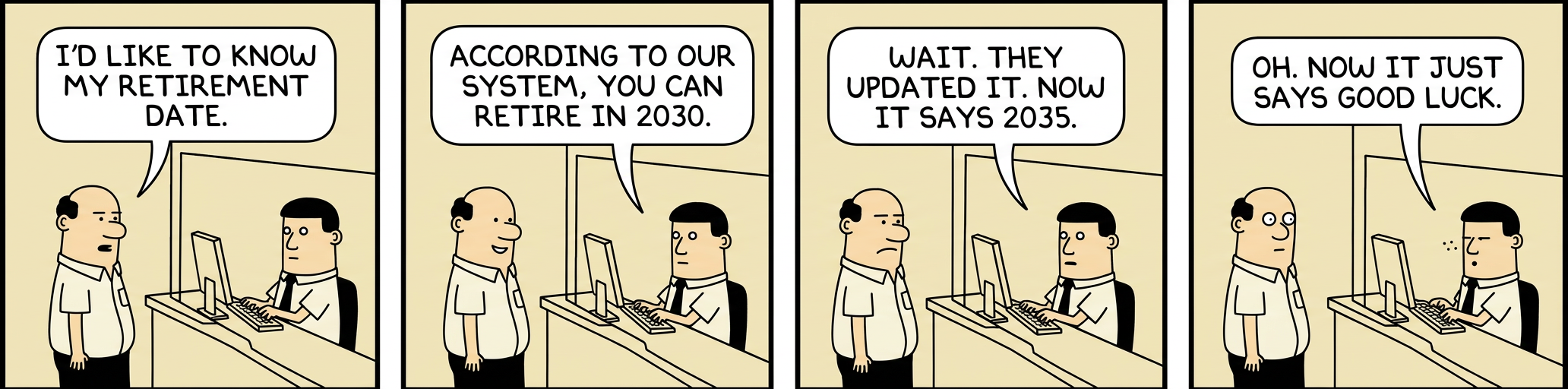

Pension Impossible

A comic strip in four panels

Panel 1: A retiree sits across from his adult son, who is scrolling his phone. Father says, 'When I retired, the company just sent me a check every month.' Panel 2: Son looks up, confused. 'They just... sent it? You didn't have to do anything?' Panel 3: Father nods contentedly. 'Not a thing. It showed up like clockwork for 22 years.' Panel 4: Son stares at his 401(k) app showing a balance chart that looks like a roller coaster. He whispers, 'What was it like... to not worry?'

Building a Personal Pension: A Step-by-Step Framework


The idea of constructing your own pension sounds daunting, but the framework is surprisingly straightforward once you understand the building blocks. It begins not with products but with arithmetic.

Step one: Calculate your income floor. Add up every non-negotiable monthly expense -- housing, food, insurance premiums, utilities, basic transportation. This is the amount that must arrive every month regardless of what markets do. For most retirees, this figure falls between $3,000 and $6,000 per month.

Step two: Inventory your guaranteed sources. Social Security is the most common. If you have a pension (even a small one), add it. Subtract these guaranteed sources from your income floor. The remaining gap is what your "personal pension" needs to fill.

Step three: Size the annuity. Work with a qualified advisor to determine how much capital, allocated to a lifetime income annuity, would fill that gap. This is typically a portion of your total savings -- not all of it. The rest remains invested for growth, discretionary spending, and legacy.

Step four: Keep a liquid reserve. Before committing any funds to an annuity, ensure you have 12 to 18 months of expenses in accessible savings. Annuities work best when you do not need to access them early. The surrender period is far less concerning when you have a proper cash cushion.

The result is a layered retirement income plan: Social Security and annuity payments cover your essentials, investments cover your wants, and a cash reserve handles surprises. It is not identical to your father's pension, but the monthly check feels remarkably similar.


Editor's Pick

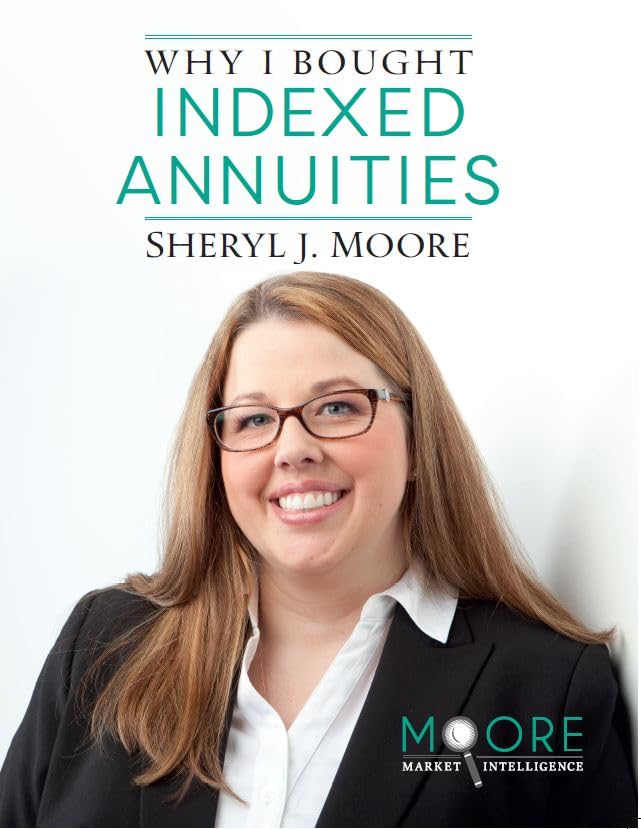
"Why I Bought Indexed Annuities"

Written by an independent industry analyst with no incentive to sell you anything — just a straightforward look at why she chose indexed annuities, what surprised her, and what she wishes more people understood. For readers who want facts, not a sales pitch.

Why I Bought Indexed Annuities - Free Book

Request Your Free Copy Below — No Cost, No Catch

Editorial Cartoons

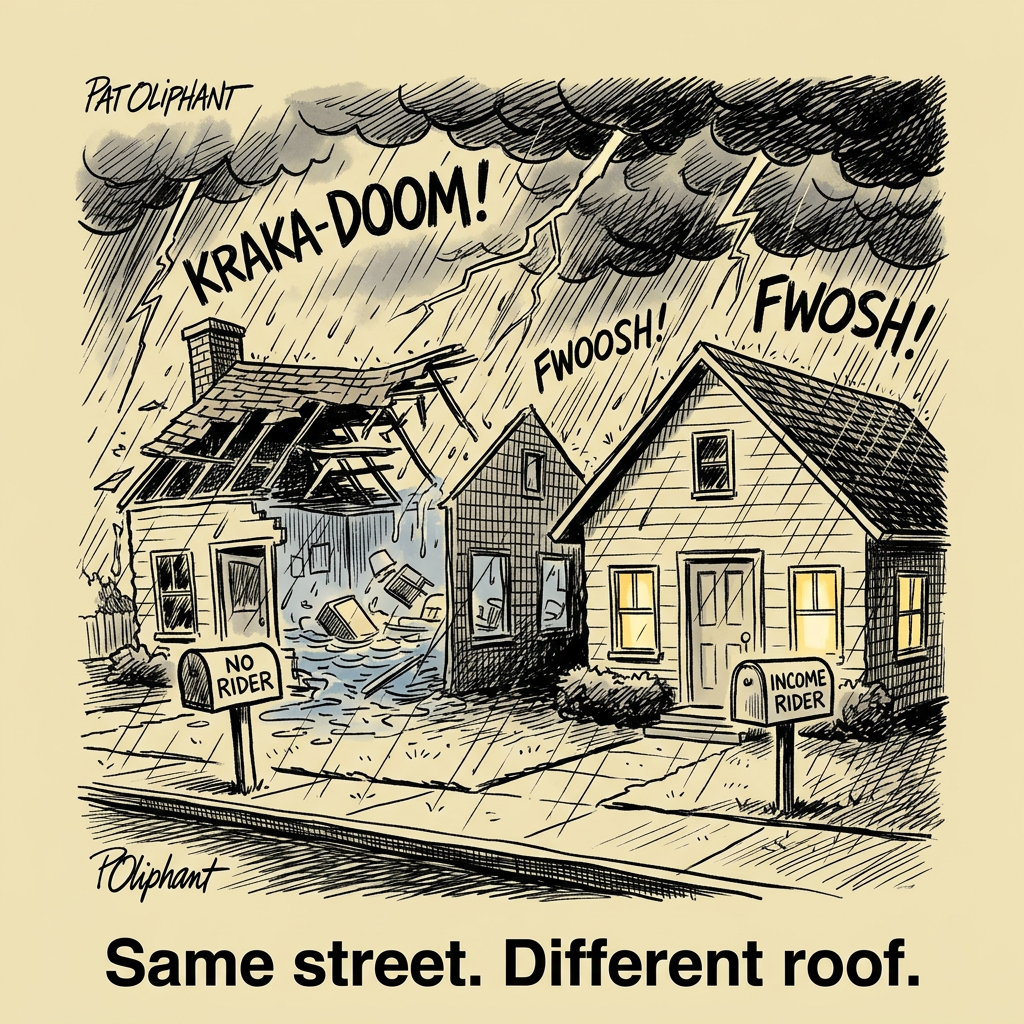
A corporate boardroom in 1981. An executive presents a chart showing 'Pension costs' with an arrow pointing up. He says, 'What if we let the employees worry about it instead?' The board erupts in applause.
A retirement-age couple sits on a park bench. The wife reads a document and says, 'It says here we can build our own pension.' The husband replies, 'Great. I also built our deck. It leans.' Caption: 'This is why you hire professionals.'

Extra! Extra!

Your Next Steps


  1. If you received this by email: Navigate back and click the booking link to schedule your free 60-minute education session.
  2. If you received this by text: Reply to your advisor and share what stood out to you. They will take it from there.
  3. Show up to your free education session. No obligations, no sales pitch — just annuity basics and answers to your questions.
  4. Receive your complimentary copy of "Why I Bought Indexed Annuities" — our way of saying thanks for your time.

"Education first. Decisions second. Always."


Classifieds

WANTED: Time machine to transport current 401(k) holders back to 1975 when employers actually promised to take care of you in retirement. Must seat two. Willing to trade my entire collection of quarterly investment statements. Contact: Nostalgic in Nashville.

Public Notices

NOTICE: The Gazette editorial board wishes to clarify that the phrase "personal pension" refers to a structured income strategy using annuities, not to a plan in which you personally deliver pension checks to yourself while wearing a suit. One reader attempted this. It did not help.

Financial Forecast

OUTLOOK: Bond yields remain in what analysts charitably call "a period of transition," which is the financial industry's way of saying no one is quite sure what will happen next. Retirees holding bonds for income may find current yields adequate but uninspiring. Those seeking guaranteed income may find annuity payout rates increasingly competitive by comparison.