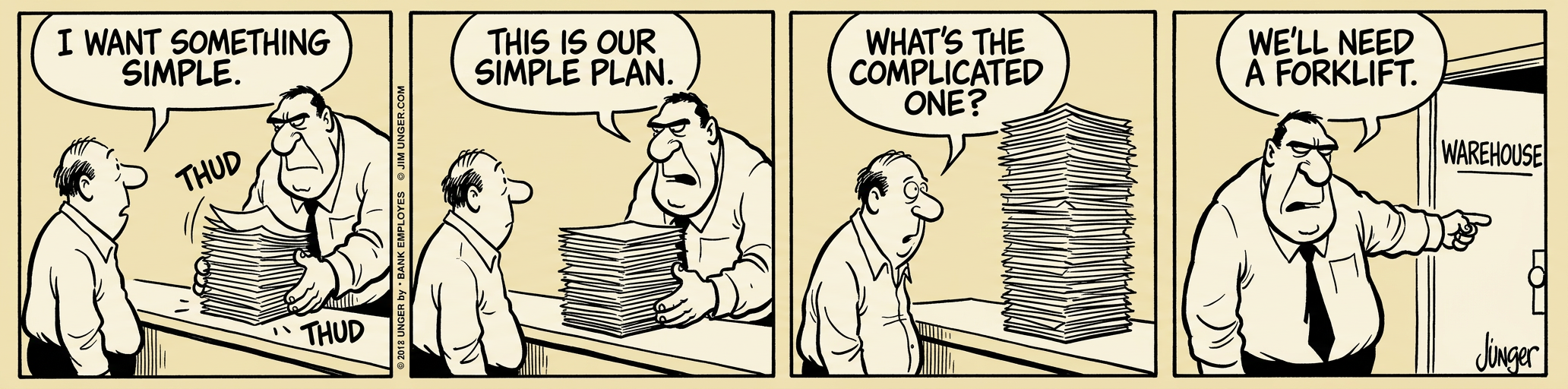
Let us begin with an uncomfortable truth: the vast majority of people who purchase an annuity do not read the contract. This is not a moral failing. Annuity contracts average 80 to 120 pages, are written in language that appears designed to discourage comprehension, and arrive in the mail several weeks after the decision has already been made. By the time the document lands on your kitchen table, you have already signed, already funded, and already moved on to thinking about something else. The contract sits in a drawer, unread, for years or decades -- until something goes wrong and you discover a provision you wish you had known about.
Today we are going to read the fine print together. Not all of it -- life is finite -- but the three provisions that cause the most surprise, the most frustration, and the most regrettable phone calls to insurance companies.
The surrender period. When you purchase most annuities, the insurance company imposes a period -- typically 5 to 10 years -- during which withdrawing more than a specified amount (usually 10 percent per year) triggers a penalty called a surrender charge. In the first year, this charge might be 8 to 10 percent of the amount withdrawn. It declines each year until it reaches zero. The surrender period exists because the insurance company has invested your premium in long-term bonds and cannot liquidate those positions without cost. You are not being punished; you are covering the company's actual economic loss.
Here is the honest trade-off: surrender periods are the price of higher credited rates. An annuity with a 10-year surrender period will almost always offer better rates than one with a 5-year period, because the company can invest your money in longer-duration, higher-yielding bonds. You are trading liquidity for return. Whether that trade makes sense depends entirely on whether you might need that money within the surrender window.
The cap rate. Fixed indexed annuities credit interest based on the performance of a market index, but that credit is typically subject to a cap -- a maximum amount you can earn in a given period. If the cap is 8 percent and the index gains 15 percent, you receive 8 percent. If the index gains 6 percent, you receive 6 percent. If the index loses 12 percent, you receive zero -- not negative 12. The cap limits your upside in exchange for eliminating your downside. Critics call this unfair. Proponents note that "zero" looks remarkably attractive when your neighbor's 401(k) just dropped 30 percent.
The participation rate. Some indexed annuities use a participation rate instead of (or in addition to) a cap. If the participation rate is 60 percent and the index gains 10 percent, you receive 6 percent. This is simply another mechanism for sharing the index return between you and the insurance company. Lower participation rates are not inherently worse -- they must be evaluated alongside other contract features like the cap, the floor, and the spread.
Here is what the brochure rarely tells you: these numbers are not permanent. Caps and participation rates are typically reset annually at the insurance company's discretion. The 8 percent cap that attracted you to the product today could be 5 percent next year. Reputable companies maintain competitive rates to retain business, but there is no contractual guarantee that today's rates will persist. Ask your advisor about the company's historical rate-setting behavior before you commit.
None of these provisions are inherently bad. They are trade-offs -- the engineering that makes guarantees possible. An insurance company cannot promise you zero downside, guaranteed income for life, and unlimited upside. Something has to give. The only danger is not knowing what you are giving up. Read the contract. Or at minimum, ask your advisor to walk you through the surrender schedule, the current cap, the participation rate, and the company's history of adjusting those figures. Fifteen minutes of questions today can prevent years of surprises.