The Wealth Gazette

"Understanding every tool in your retirement toolbox — so you can choose the right ones."

Vol. LXII · No. 9 ♦ Education Series ♦

Fixed, Indexed, Variable: Which One Does What?

Three annuity types, three different jobs -- a side-by-side comparison with no hidden agenda


Walk into any financial advisor's office and mention annuities, and you will likely hear one of three words: fixed, indexed, or variable. These are not interchangeable flavors of the same product. They are fundamentally different instruments designed for fundamentally different people in fundamentally different situations. Yet the industry has a persistent habit of presenting all three under a single umbrella, as though choosing between them were merely a matter of personal taste rather than financial architecture. Today we lay them side by side, without bias, so you can see what each one actually does.

The fixed annuity is the simplest of the three. You deposit money. The insurance company guarantees a specific interest rate for a specific period -- say, 4.5 percent for five years. At the end of that period, you can renew, withdraw, or transfer. Your principal is guaranteed. Your credited interest is guaranteed. The stock market could collapse tomorrow and your balance would be unaffected. The trade-off is equally straightforward: your upside is capped at whatever rate the company is offering. In a year when the S&P 500 gains 25 percent, your fixed annuity still earns 4.5 percent. You are purchasing certainty, and certainty has a price.

The fixed indexed annuity occupies the middle ground. Your principal is still protected -- you cannot lose money due to market declines. But instead of a flat interest rate, your annual credit is linked to the performance of a market index, subject to caps, participation rates, or spreads. In a good market year, you might earn 6 to 8 percent. In a down year, you earn zero -- not negative, just zero. This is the "zero is your hero" concept that advisors frequently cite: the worst that can happen in any given year is that you simply do not earn anything, while your neighbor's unprotected portfolio might be down 20 percent. The trade-off is complexity. You must understand caps, participation rates, crediting methods, and the fact that these terms can be adjusted annually.

The variable annuity is the most market-exposed of the three. Your money is invested in sub-accounts that function similarly to mutual funds. If the investments perform well, your account grows. If they perform poorly, your account shrinks. There is no floor on losses unless you purchase an optional rider (an add-on guarantee) -- and those riders carry fees that typically range from 0.5 to 1.5 percent annually, on top of the base contract fees. The appeal of variable annuities lies in their unlimited upside potential and tax-deferred growth. The drawback is their cost structure: between mortality and expense charges, administrative fees, sub-account management fees, and optional rider fees, total annual costs of 2.5 to 3.5 percent are not uncommon. Those fees compound over time and can meaningfully erode your returns.

Here is the value gap that catches most people: there is no universally "best" type. A fixed annuity is superior for someone who values simplicity and guaranteed returns above all else -- the person who sleeps better knowing exactly what they will earn. An indexed annuity is designed for the person who wants some market participation but cannot stomach actual losses -- the "I want to grow, but I cannot afford to go backward" retiree. A variable annuity may serve the person who wants market-level returns with tax-deferred growth and has a long time horizon to absorb both the volatility and the fees.

The honest trade-off across all three: the more guarantee you want, the more upside you surrender. The more upside you want, the more risk and fees you accept. This is not a flaw in annuity design. It is a fundamental law of finance, as inescapable as gravity. Any advisor who tells you otherwise -- who promises full market upside with full downside protection at no cost -- is either misinformed or misleading you.

The right question is never "which type is best?" It is "which type matches my actual situation?" Are you five years from retirement with a moderate risk tolerance and a strong pension? Your answer will differ from someone who is already retired, has no pension, and lies awake at night worrying about their portfolio. Same product category, entirely different prescriptions.

In the next edition, we will discuss something equally important: how to evaluate the person recommending these products to you. Because even the right annuity, sold by the wrong advisor for the wrong reasons, can become the wrong annuity.
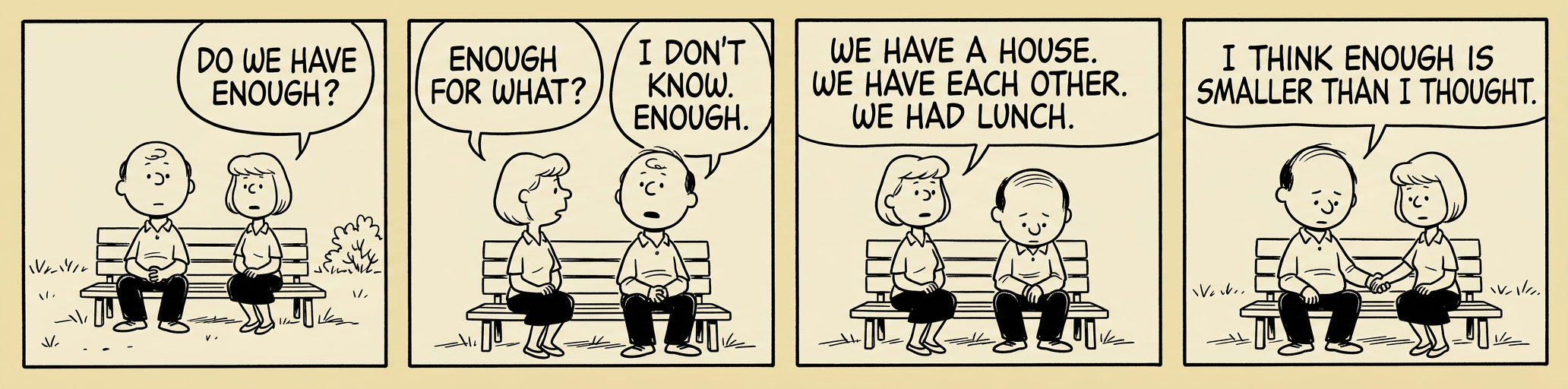
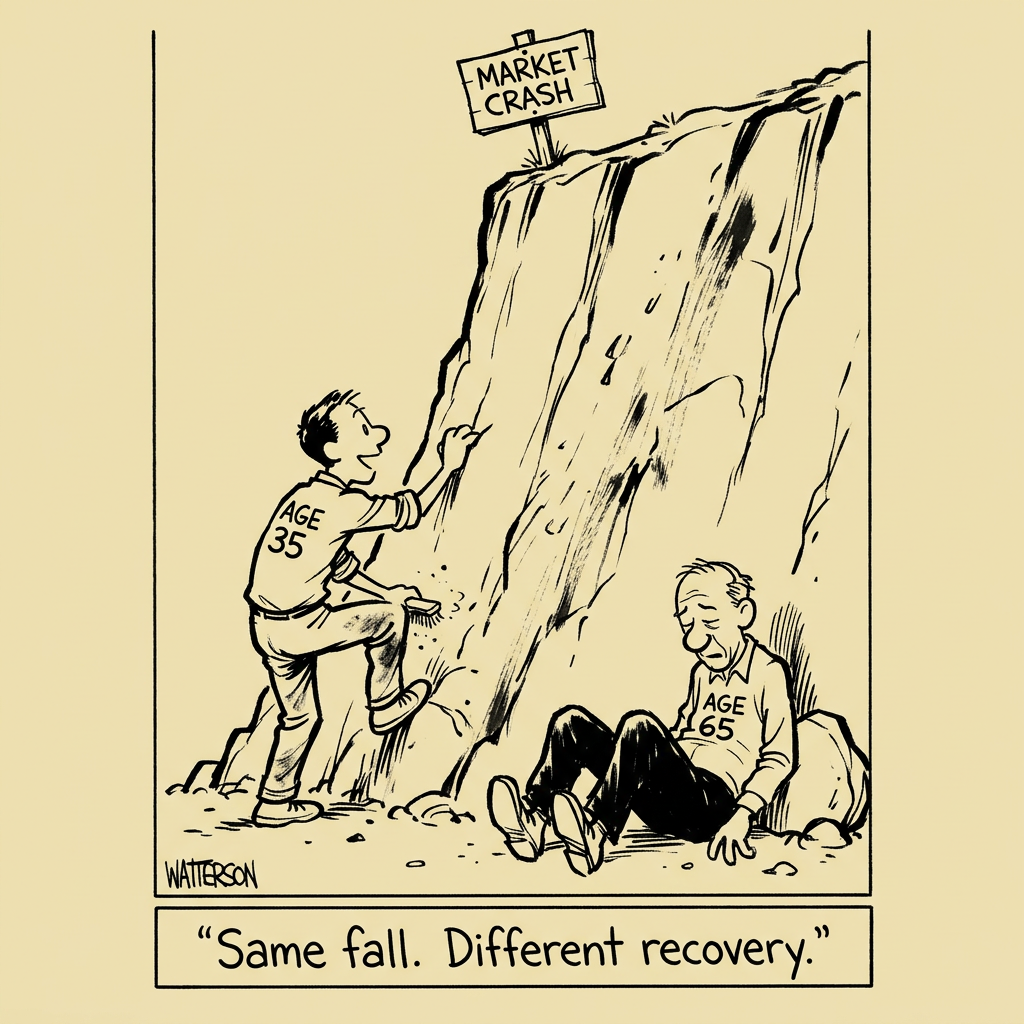
The Three Annuities Walk Into a Bar

A comic strip in four panels

Panel 1: Three annuities walk into a bar. The Fixed Annuity says, 'I will have exactly what I had last time. And the time before that.' Panel 2: The Indexed Annuity says, 'I will have whatever he is having, but only up to 60% of it. And nothing if the bar is having a bad night.' Panel 3: The Variable Annuity says, 'I will try everything on the menu and pay extra for the privilege.' Panel 4: The bartender says, 'So... the usual?' All three nod.

Matching the Annuity Type to the Person


After explaining the three annuity types, the most common question readers ask is simply: "Which one should I buy?" The answer depends on five factors that have nothing to do with the products themselves and everything to do with you.

Your risk tolerance. Not your theoretical risk tolerance -- the one you claim on questionnaires when markets are calm -- but your actual, visceral, 3 AM risk tolerance. How did you feel in March 2020 when markets dropped 34 percent in 23 days? If you sold, or wanted to sell, you have your answer. If you bought more, you have a different answer. Fixed annuities suit the first person. Variable annuities may suit the second. Indexed annuities serve the vast middle ground.

Your income needs. If you need the annuity to generate monthly income starting soon, you are looking at income-oriented products -- likely fixed or indexed with income riders. If you are accumulating for a future need 10 or more years away, the product landscape widens.

Your existing guarantees. A retiree with a strong Social Security benefit and a small pension has a different calculus than one with Social Security alone. The more guaranteed income you already have, the more risk you can afford to take with additional savings.

Your time horizon. Variable annuities with their higher fee structures need time -- often 15 to 20 years -- for tax-deferred growth to overcome their cost drag. If your horizon is shorter, the math may not work in your favor.

Your complexity tolerance. Some people want to understand every moving part. Others want a simple promise they can count on. There is no shame in either preference. A fixed annuity that you fully understand will serve you better than an indexed annuity whose mechanics confuse you, even if the indexed product has theoretically higher potential.


Editor's Pick

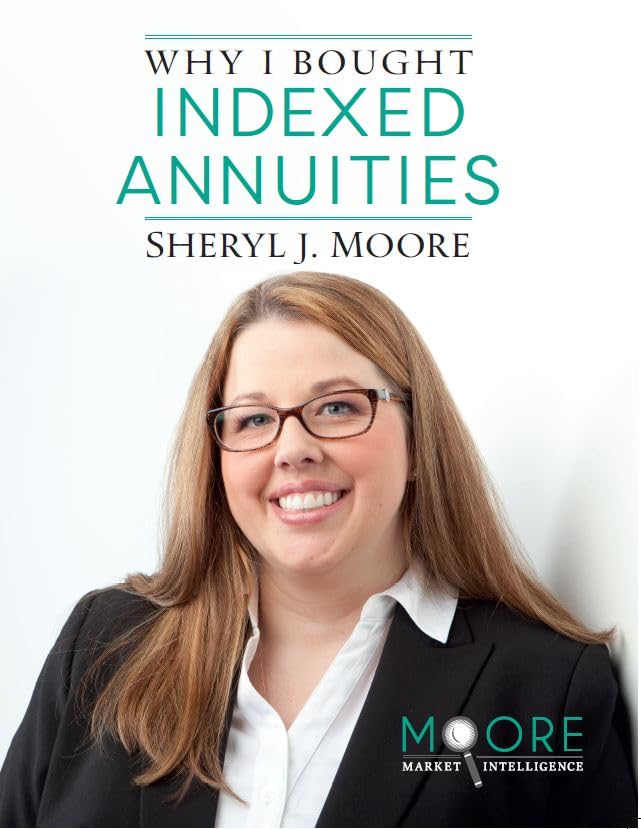
"Why I Bought Indexed Annuities"

Written by an independent industry analyst with no incentive to sell you anything — just a straightforward look at why she chose indexed annuities, what surprised her, and what she wishes more people understood. For readers who want facts, not a sales pitch.

Why I Bought Indexed Annuities - Free Book

Request Your Free Copy Below — No Cost, No Catch

Editorial Cartoons

A couple at a financial advisor's office. The advisor has drawn three paths on a whiteboard -- one straight and flat, one gently wavy, and one like a roller coaster. He asks, 'Which of these matches your stomach?' The wife points to the flat line. The husband points to the roller coaster. The advisor reaches for a larger whiteboard.
A store shelf displays three products labeled 'Fixed: Simple,' 'Indexed: Medium,' and 'Variable: Advanced.' A shopper stares at them and says, 'Is there one labeled Just Tell Me What To Do?' The store clerk replies, 'That is called a financial advisor. Aisle 7.'

Extra! Extra!

Your Next Steps


  1. If you received this by email: Navigate back and click the booking link to schedule your free 60-minute education session.
  2. If you received this by text: Reply to your advisor and share what stood out to you. They will take it from there.
  3. Show up to your free education session. No obligations, no sales pitch — just annuity basics and answers to your questions.
  4. Receive your complimentary copy of "Why I Bought Indexed Annuities" — our way of saying thanks for your time.

"Education first. Decisions second. Always."


Classifieds

WANTED: Decision-making ability, last seen functioning prior to learning there are three types of annuities, each with sub-types. Owner reports that every time he narrows his choice, someone mentions a fourth option. Will trade a moderately diversified portfolio for the clarity of a single pension check. Contact: Paralyzed in Portland.

Public Notices

NOTICE: The Gazette reminds readers that no annuity type is inherently superior to another. Declaring your annuity type "the best" at social gatherings is the financial equivalent of insisting your car is the only good car. It reveals more about you than about the product.

Financial Forecast

OUTLOOK: The S&P 500 has delivered strong returns over the past 18 months, which has made variable annuity proponents feel vindicated and fixed annuity holders feel patient. Historical patterns suggest both emotions are temporary. The index will eventually disappoint the first group and reward the second, or vice versa, at intervals that are predictable only in retrospect.